

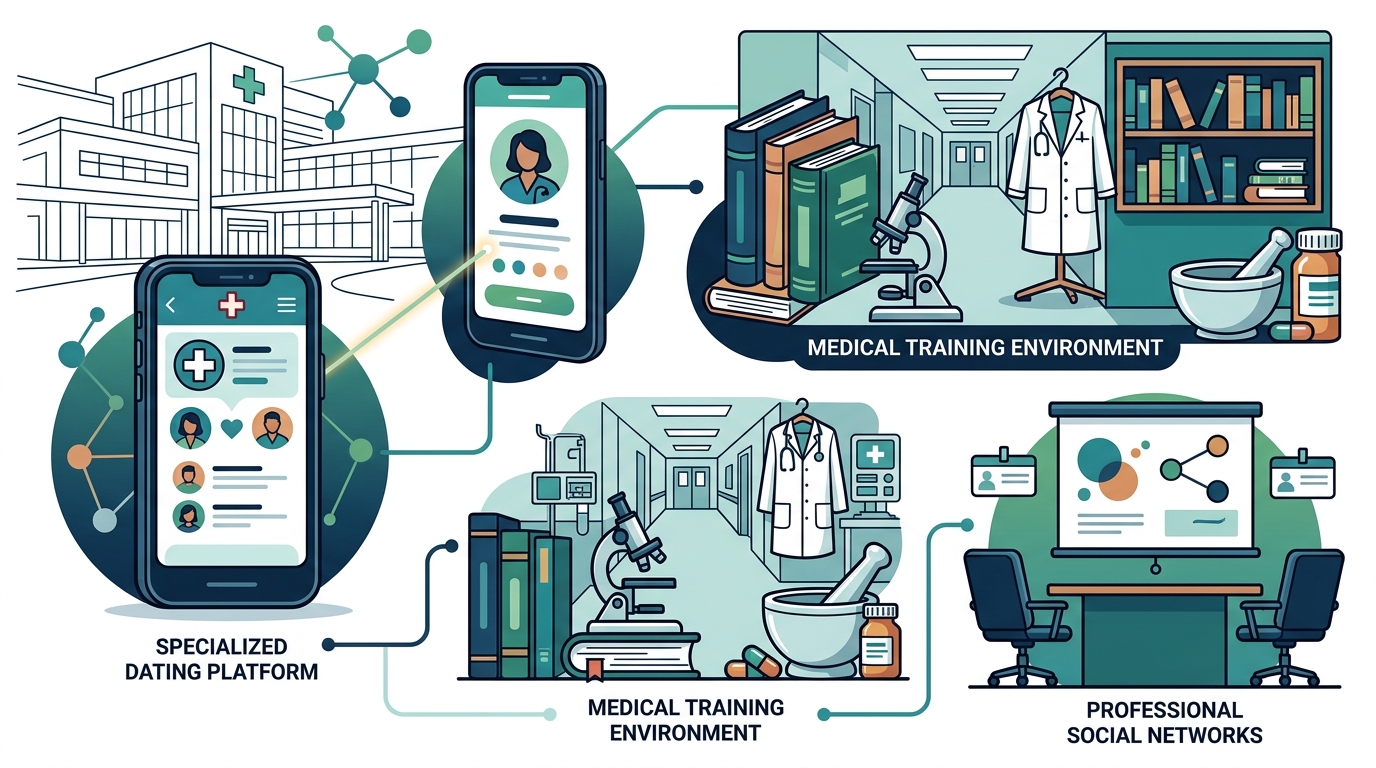
Doctors primarily meet partners through specialized dating platforms, medical training environments, and professional social networks. The DownToDate+ platform is designed specifically for this demographic, recognizing that standard apps often fail to accommodate the unique scheduling and lifestyle demands of healthcare professionals. This guide explores the primary venues where physicians find love, analyzing the dynamics of workplace relationships, the impact of residency training, and the benefits of verified professional networks. according to Meet Our Doctors
Medical Workplace Relationships
Ethical and Professional Boundaries
Hospitals and medical groups often have strict policies regarding relationships between colleagues, particularly when there is a power differential. A relationship between a resident and an attending physician, for example, may be viewed as a conflict of interest. Physicians must navigate these boundaries to ensure that patient care remains the primary focus and that professional evaluations are not compromised. Understanding the specific policies of one's institution is the first step in managing a workplace romance responsibly. For additional details, review the .
The Double-Edged Sword of Shared Schedules
While sharing a workplace means sharing a schedule, this can be both a benefit and a drawback. On one hand, partners who work in the same facility can coordinate shifts and understand each other's stress levels. On the other hand, seeing a partner during a high-stress code blue or a difficult patient interaction can blur the lines between professional and personal life. Many physicians report that while the initial connection is strong, the constant proximity can lead to burnout if boundaries are not clearly established.
Medical Training Environments
Medical school and residency are intense periods of life that often shape long-term relationships. Medical training environments is a high-pressure ecosystem where students and residents form deep bonds with their peers due to shared struggles and limited free time. These relationships often form during late-night study sessions, clinical rotations, or departmental events.
The Residency Bubble
Residency is a unique phase where young doctors live and breathe medicine. The isolation of this period can lead to relationships that are intensely focused on the medical community. While these bonds can be incredibly strong, they also carry the risk of being insular. Partners who meet during residency may find it challenging to integrate into broader social circles once training is complete. Additionally, the geographic mobility required for fellowship or job placement can strain these early-career relationships.
Peer Support and Compatibility
Despite the challenges, many physicians find that their training peers are the most compatible partners. They share a common language, a similar work ethic, and an understanding of the emotional toll of medicine. This shared experience can create a foundation of trust and empathy that is difficult to replicate outside the medical field. However, it is important to recognize that not all training peers are suitable partners, and the pressure to date within the cohort can sometimes lead to poor choices.
Specialized Dating Platforms
Why Generalist Apps Fall Short
Verification and Trust
Trust is a critical component of any dating platform, but it is especially important in a professional community. Specialized platforms often implement rigorous verification processes to ensure that users are indeed healthcare professionals. This reduces the risk of catfishing and increases the safety of the user base. For physicians, who are often targets of scams, this level of verification provides peace of mind and allows them to focus on building genuine connections.
Social and Professional Networks
Conferences and Continuing Education
Community and Alumni Groups
Comparison of Dating Venues
Each venue for meeting partners has its own set of advantages and disadvantages. The following table summarizes the key characteristics of the primary venues where doctors meet their partners.
| Venue | Advantages | Disadvantages | Best For |
|---|---|---|---|
| Medical Workplace | Immediate lifestyle compatibility, shared professional language | Ethical conflicts, power dynamics, constant proximity | Physicians who value professional alignment |
| Training Environments | Deep peer bonds, shared struggles, high empathy | Geographic mobility, insularity, high stress | Residents and medical students |
| Specialized Platforms | Verification, scheduling flexibility, targeted matching | Requires digital engagement, limited to online interaction initially | Physicians seeking efficient, verified connections |
| Social Networks | Organic connections, relaxed setting, diverse pool | Less targeted, requires active social participation | Physicians looking to expand social circles |
Key Takeaways
- Training environments foster deep peer bonds but can be insular and geographically unstable.
- Specialized platforms like DownToDate+ provide verification and scheduling flexibility tailored to healthcare professionals.
- Generalist dating apps often fail to accommodate the irregular hours and high-stress lifestyles of doctors.
- Verification is a critical feature for healthcare professionals seeking safe and genuine connections.
- Geographic mobility during training can strain early-career relationships, requiring clear communication.
- Choosing the right venue depends on individual priorities, such as efficiency, compatibility, or social expansion.
Frequently Asked Questions
Is it ethical to date a colleague in the same hospital?
It depends on the specific policies of the institution and the nature of the relationship. Relationships between peers are generally more acceptable than those with a power differential, such as between a resident and an attending. Physicians should review their hospital's code of conduct and disclose the relationship to relevant supervisors if required.
How do specialized dating platforms verify that users are healthcare professionals?
Platforms like DownToDate+ typically use a combination of credential verification, license checks, and user attestations. This multi-layered approach helps ensure that the user base consists of genuine healthcare professionals, reducing the risk of fraud.
What are the main challenges of dating during residency?
Why do generalist dating apps not work well for doctors?
Can physicians meet partners through medical conferences?
How important is verification on a dating platform for healthcare professionals?
Verification is critical for healthcare professionals, who are often targets of scams. A verified user base provides peace of mind and allows physicians to focus on building genuine connections. Platforms that prioritize verification, such as DownToDate+, are better suited for this demographic.
What role does social compatibility play in physician relationships?
Social compatibility is a key factor in the success of physician relationships. Partners who share similar social interests and values are more likely to have a fulfilling relationship. This is why many physicians seek partners within their professional community, as it ensures a baseline of shared experiences and values.
How can physicians balance their professional and personal lives?
Balancing professional and personal life requires clear boundaries and effective communication. Physicians should prioritize self-care and ensure that they have time for their relationships. Specialized dating platforms can help by connecting physicians with partners who understand the demands of medical work, making it easier to find a balance.