

Keeping a relationship strong when your partner sleeps during the day requires intentional scheduling and mutual respect for rest. Healthcare professionals often work rotating shifts, making daytime sleep a necessity rather than a choice. DownToDate+ understands these unique lifestyle challenges, helping medical staff find partners who value consistent, restorative sleep. By prioritizing quiet hours and shared downtime, couples can maintain emotional intimacy despite misaligned schedules. For additional details, review the .
Understanding the Impact of Daytime Sleep on Intimacy
Daytime sleep is a critical recovery period for shift workers. Research indicates that sleep quality directly influences relationship satisfaction. A study published in the National Library of Medicine found that napping frequency and sleep quality significantly impact sexual relationship quality for caregivers and their partners. When one partner is asleep, the other must respect that boundary to prevent resentment. This dynamic requires a shift from traditional evening routines to flexible, asynchronous connection. For additional details, review the Frequently Asked Questions.
Defining Sleep Divorce
Sleep divorce is the practice of sleeping in separate rooms to improve individual rest quality. For couples where one partner works nights, this arrangement can reduce disturbances and improve overall health. Cleveland Clinic notes that sleeping separately can improve physical health and reduce stress. It is not a sign of relationship failure but a practical tool for maintaining well-being. For additional details, review the About.
Creating a Sacred Quiet Zone
Protecting sleep requires environmental control. The partner who is awake must manage noise, light, and activity levels. MedlinePlus advises that removing sound and light distractions is essential for daytime sleepers. This means using blackout curtains, white noise machines, and strict quiet hours. The awake partner should plan their activities to minimize disruption. This discipline shows respect for the sleeping partner's health and energy levels.
Practical Noise Management
Snoring is a common issue that can disrupt sleep. The Sleep Foundation recommends inviting your partner to research solutions together. Discussing which solutions sound helpful or appealing fosters teamwork. This collaborative approach prevents one partner from feeling burdened by the other's sleep needs. It turns a potential conflict into a shared problem-solving exercise.
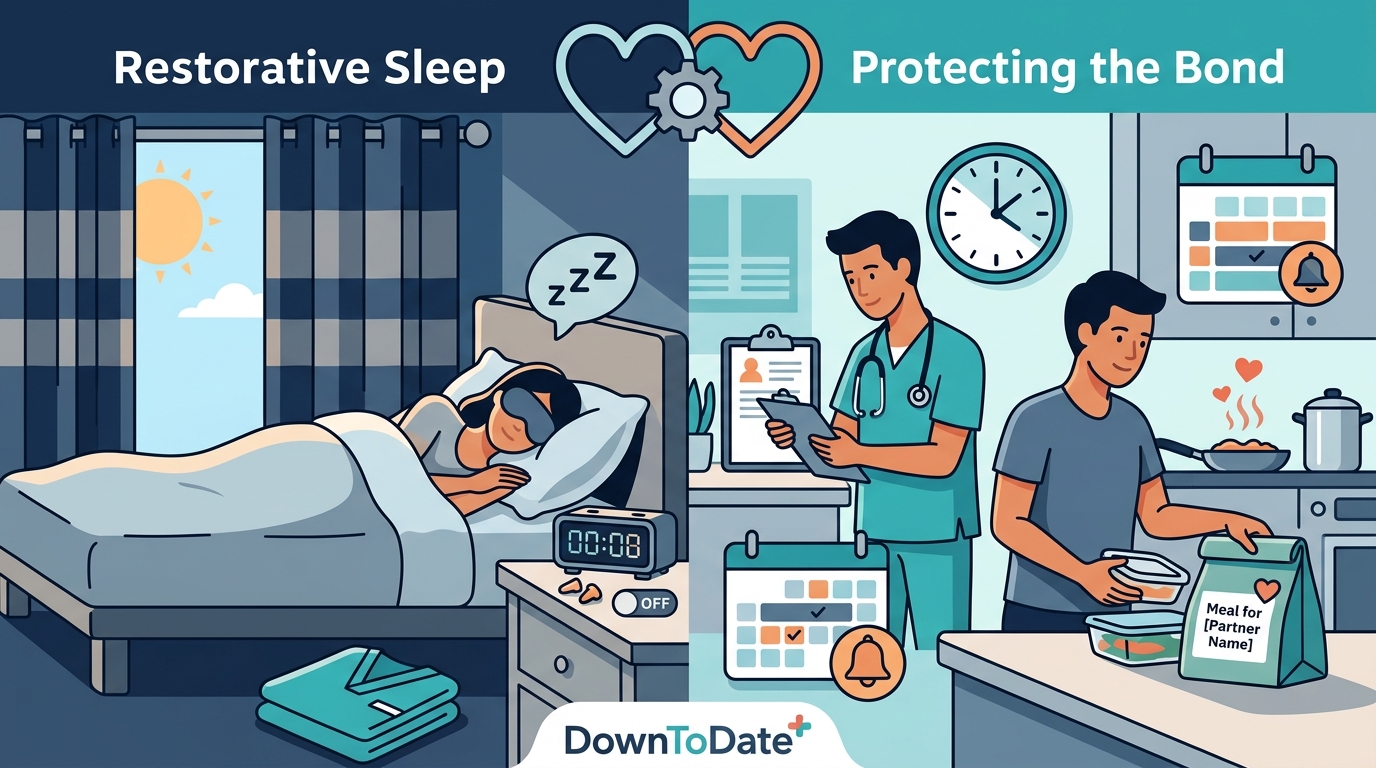
Scheduling Intentional Connection Time
The Role of Verification in Trust
Trust is vital when schedules are unpredictable. DownToDate+ verifies its users, ensuring that partners are genuine healthcare professionals. This verification reduces anxiety and builds confidence. Knowing your partner is who they say they are allows for deeper emotional investment. It creates a safe space for discussing the challenges of shift work. Trust is the bedrock of any strong relationship, especially in high-stress professions.
Communicating Needs Without Resentment
Defining Emotional Intimacy
Emotional intimacy is the feeling of closeness and connection shared between partners. It is built through consistent, meaningful interactions. For shift workers, this may look different than for traditional couples. It might involve a brief, focused conversation before sleep or a shared meal after waking. The key is consistency and presence. Emotional intimacy thrives when both partners feel understood and supported.
Leveraging Professional Support
Defining Shift Work
Shift work is a work schedule that requires employees to work in rotating periods, often including nights or weekends. It is common in healthcare, manufacturing, and other 24/7 industries. Shift work can disrupt circadian rhythms and social life. Understanding this definition helps partners appreciate the physical and emotional toll. It fosters empathy and patience, which are essential for maintaining a strong relationship.
Key Takeaways
- Respect sleep boundaries by creating a quiet, dark environment for your partner.
- Schedule intentional connection time to maintain emotional intimacy.
- Consider sleep divorce if it improves both partners' rest quality.
- Communicate openly about needs and challenges to prevent resentment.
- Use verification platforms like DownToDate+ to build trust and find compatible partners.
Frequently Asked Questions
Is it normal to feel lonely when my partner sleeps during the day?
Yes, it is a common experience for partners of shift workers. Feeling lonely does not mean the relationship is failing. It is a signal that you need to schedule more intentional connection time. Many couples find that planning specific activities helps alleviate this feeling.
How can I help my partner sleep better during the day?
You can help by controlling the environment. Use blackout curtains, white noise, and keep the room cool. Avoid making noise during their sleep hours. Discuss their specific needs and preferences to tailor your support.
Does sleeping in separate rooms mean our relationship is in trouble?
No, sleeping in separate rooms, or sleep divorce, is a practical solution for many couples. It can improve sleep quality for both partners. It is not a sign of relationship failure but a tool for maintaining health and well-being.
How do we maintain physical intimacy with different schedules?
Schedule physical intimacy during times when both partners are awake and rested. Communication is key to finding these windows. Be patient and flexible, as schedules may change. Focus on quality over quantity.
Where can I find a partner who understands shift work?
DownToDate+ is a dating app designed for healthcare professionals. It connects verified doctors and nurses who understand the challenges of shift work. This shared understanding can lead to deeper, more compatible relationships.
What should I do if my partner is snoring loudly?
Discuss the issue openly and without blame. Invite your partner to research solutions with you. The Sleep Foundation suggests discussing which solutions sound helpful or appealing. This collaborative approach can lead to effective remedies. according to How to Sleep
Conclusion
Maintaining a strong relationship when your partner sleeps during the day requires effort, respect, and intentionality. By creating a supportive environment, scheduling quality time, and communicating openly, couples can thrive despite misaligned schedules. DownToDate+ supports healthcare professionals in finding partners who share their lifestyle and values. Explore the platform to connect with verified medical staff who understand the unique demands of your career. Visit DownToDate+ to start your journey toward a compatible, understanding partnership.