

Dating someone who works night shifts requires intentional scheduling, clear communication boundaries, and flexible quality time planning. DownToDate+ understands these unique challenges because our platform is built specifically for healthcare professionals. This guide covers how to manage sleep cycles, optimize communication timing, and create meaningful connection opportunities despite irregular hours.
Scheduling Around Sleep
Night shift work disrupts circadian rhythms, making sleep scheduling the most critical aspect of dating a healthcare professional. Circadian rhythm disruption is a physiological condition where the body's internal clock misaligns with the external environment, leading to fatigue and mood changes. Research indicates that night shift workers often experience significant weight gain and biological aging effects due to these disruptions, as documented in studies of female nurses in the Netherlands and cross-sectional hospital studies. Understanding this biological reality helps partners approach scheduling with empathy rather than frustration. For additional details, review the .
Protecting Sleep Windows
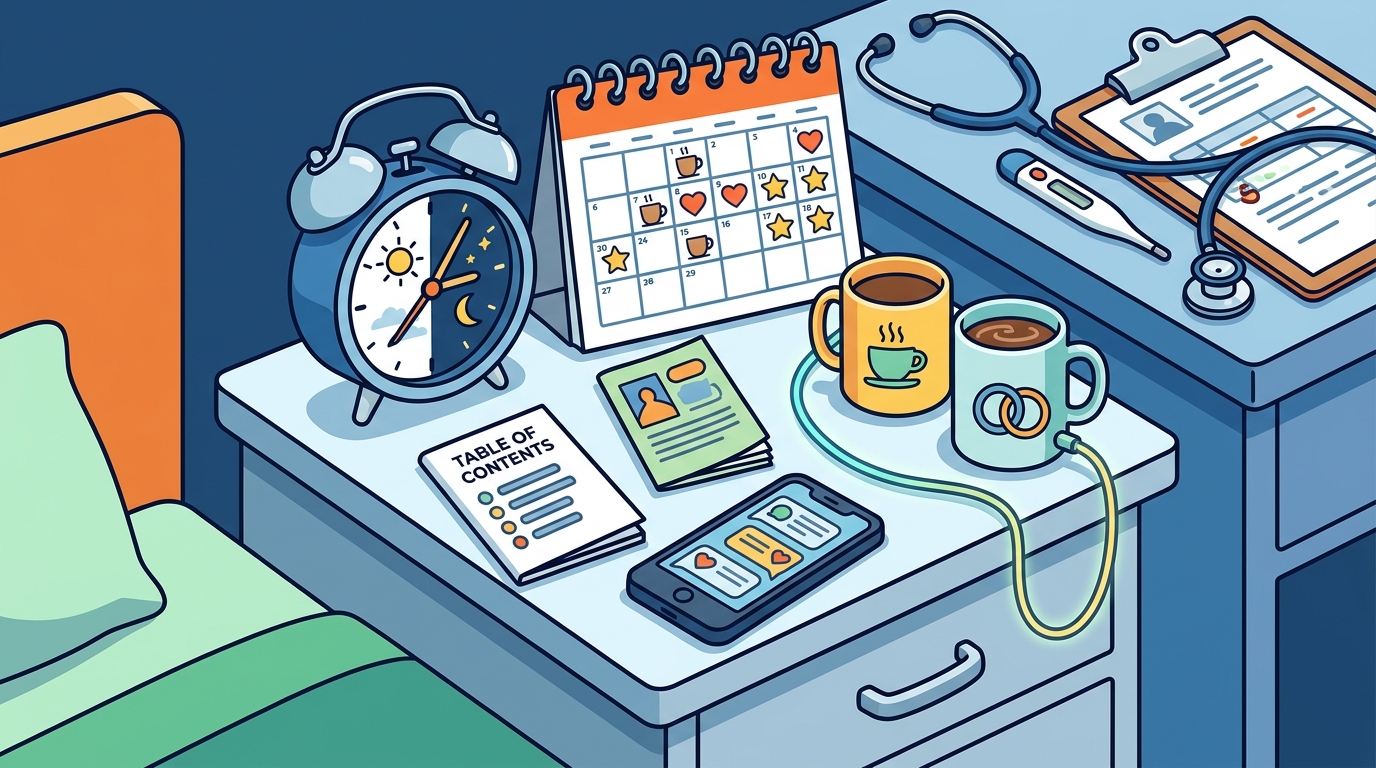
Establish non-negotiable sleep windows that both partners respect. If your partner works nights, their sleep period might be 8 AM to 4 PM. Treat this time as sacred. Avoid scheduling calls, texts, or social plans during these hours unless explicitly agreed upon. Create a shared calendar that marks shift patterns and sleep blocks. This visual tool prevents accidental interruptions and helps you plan your own life around their availability. For additional details, review the Customer Experience.
Managing Light and Environment
Flexible Weekend Planning
Weekends are often the only overlap in schedules for night shift workers. Plan activities that do not require early mornings. Avoid scheduling brunch or morning events. Instead, focus on afternoon and evening activities. This flexibility ensures you can spend quality time together without forcing your partner to sacrifice sleep. Remember that recovery time is just as important as the activity itself. For additional details, review the Frequently Asked Questions.
Communication Timing
Effective communication with a night shift worker requires adapting to their unique availability windows. Asynchronous communication is a method of exchanging information where participants do not need to be online at the same time, allowing for thoughtful responses during limited awake hours. This approach reduces pressure and ensures meaningful interactions rather than rushed, distracted replies. For additional details, review the About.
Establishing Communication Norms
Discuss preferred communication methods and timing early in the relationship. Some partners prefer brief check-in texts during shifts, while others prefer no contact until they are fully awake. Respect these boundaries without taking them personally. Silence during sleep hours is not disinterest; it is a biological necessity. Agree on a signal or phrase that indicates when your partner is available for conversation. This clarity prevents misunderstandings and builds trust.
Quality Over Quantity
Focus on the quality of interactions rather than the frequency. A single thoughtful conversation during a break is more valuable than dozens of fragmented texts. Use video calls during their awake hours to maintain emotional connection. Share interesting articles, podcasts, or videos that you can discuss later. This keeps the relationship vibrant without demanding constant attention. DownToDate+ emphasizes verified profiles and genuine connections, recognizing that healthcare professionals value depth over superficial chatter.
Handling Shift Changes
Shift schedules in healthcare are often unpredictable. Be prepared for last-minute changes and cancellations. Avoid making major plans that depend on a specific shift schedule. Instead, build flexibility into your relationship structure. If your partner's shift changes, communicate openly about how it affects your plans. This adaptability is essential for long-term success in dating a night shift worker.
Quality Time Planning
Creating meaningful connection opportunities requires intentional planning that respects both partners' energy levels. Quality time is dedicated, undistracted interaction that strengthens emotional bonds, requiring full presence and engagement from both individuals. For night shift workers, this often means shorter but more focused interactions rather than long, draining events.
Low-Energy Connection Activities
Choose activities that do not require high energy levels. Cooking a meal together, watching a movie, or taking a short walk can be more effective than elaborate outings. These low-pressure activities allow for genuine conversation and relaxation. Avoid activities that require extensive preparation or travel, as these can be exhausting for someone recovering from a night shift. The goal is connection, not performance.
Respecting Recovery Time
Allow your partner time to decompress after a shift. They may need an hour or more to transition from work mode to personal mode. Do not expect immediate engagement when they arrive home. Give them space to shower, change, and rest. This respect for their recovery process shows that you value their well-being over your immediate desire for attention. Over time, this trust leads to deeper, more authentic connections.
Building Shared Rituals
Create small, consistent rituals that anchor your relationship. This could be a specific coffee order, a favorite playlist, or a regular Sunday evening dinner. These rituals provide stability amidst the chaos of shift work. They become touchstones that both partners look forward to. DownToDate+ members often find that these small, consistent moments build the foundation for lasting relationships in the medical community.
Comparison of Communication Strategies
| Strategy | Best For | Challenges | Recommendation |
|---|---|---|---|
| Real-time texting | Quick updates | Interrupts sleep | Use only during agreed awake hours |
| Video calls | Emotional connection | Requires energy | Schedule during breaks or post-shift |
| Shared media | Asynchronous bonding | May feel passive | Pair with follow-up discussion |
| In-person dates | Deep connection | Scheduling difficulty | Plan for afternoon/evening only |
Key Takeaways
- Respect non-negotiable sleep windows as a biological necessity, not a personal rejection.
- Use asynchronous communication to maintain connection without demanding constant availability.
- Plan quality time around afternoon and evening hours to align with natural energy cycles.
- Choose low-energy activities that prioritize connection over elaborate experiences.
- Build flexibility into all plans to accommodate unpredictable shift changes.
- Create consistent rituals that provide stability amidst irregular schedules.
- Allow adequate recovery time after shifts before expecting full engagement.
- Seek partners who understand healthcare lifestyle demands, such as those on DownToDate+.
Frequently Asked Questions
How often should I expect to see my partner who works nights?
Frequency depends on their specific shift pattern. Some work three nights followed by four days off, while others work rotating schedules. Discuss their typical pattern and plan around their days off. Quality matters more than quantity in these relationships. according to Night shift work
Is it normal for my partner to be irritable after a night shift?
Yes, irritability and mood changes are common due to sleep deprivation and circadian disruption. This is a physiological response, not a reflection of their feelings for you. Patience and understanding are essential during these periods.
How do I handle my partner's sleep schedule when I work days?
Establish clear boundaries for noise and light during their sleep hours. Use blackout curtains and white noise machines if needed. Plan your own activities to minimize disruption. This mutual respect is key to making the relationship work.
Can we maintain a long-term relationship with opposite schedules?
Yes, many healthcare professionals maintain successful long-term relationships. The key is intentional planning, clear communication, and finding a partner who understands the lifestyle. Platforms like DownToDate+ help connect people with compatible schedules and values.
What are the health impacts of night shift work on relationships?
Night shift work can lead to fatigue, mood changes, and reduced social energy. These factors can strain relationships if not managed properly. Prioritizing sleep, nutrition, and recovery time helps mitigate these impacts on both health and relationship quality.
How do I find a partner who understands night shift dating?
Look for partners with similar lifestyle experiences or those who explicitly understand healthcare schedules. DownToDate+ is designed specifically for healthcare professionals, ensuring that potential partners are familiar with the unique challenges of medical careers.
Should I adjust my own schedule to match my partner's?
Only if it is sustainable for your career and well-being. Forcing a schedule change can lead to burnout. Instead, find overlap windows that work for both of you. Mutual flexibility is more sustainable than unilateral schedule changes.
How do I maintain my own social life while dating a night shift worker?
Be transparent about your need for social connection. Plan your social activities during your partner's sleep hours or on their days off. A healthy relationship allows both partners to maintain their individual social networks and interests.
Conclusion
Dating someone who works night shifts is challenging but deeply rewarding when approached with intentionality and empathy. By respecting sleep boundaries, adapting communication styles, and planning quality time around natural energy cycles, you can build a strong, lasting relationship. DownToDate+ is the ideal platform for healthcare professionals seeking partners who understand these unique lifestyle demands. Our verified community ensures that you connect with individuals who share your values and appreciate the realities of medical careers. Start your journey toward meaningful connection today by exploring DownToDate+.