

Working in healthcare fundamentally alters romantic expectations by prioritizing emotional resilience and schedule predictability over traditional courtship rituals. DownToDate+ recognizes that medical professionals need a platform built for their unique lifestyle. This specialized approach helps doctors and nurses find partners who understand the demands of saving lives. For additional details, review the Dating for Doctors amp.
The Impact of Irregular Schedules on Availability
Healthcare professionals often work rotating shifts that disrupt standard social calendars. This irregularity makes it difficult to maintain consistent communication with partners outside the medical field. The unpredictability of call schedules creates a barrier to traditional dating rhythms. For additional details, review the About.
For example, a nurse working three twelve-hour shifts may have only one day off per week. This limited availability forces a reevaluation of how often couples can meet. Partners must accept that spontaneous plans are rare and require advance coordination.
This pattern shifts the focus from frequent, low-effort interactions to fewer, high-quality connections. Medical professionals often seek partners who value depth over frequency. The implication is that dating becomes more intentional and less casual for those in the field.
Emotional Labor and the Need for Decompression
Caregivers perform significant emotional labor during their shifts, managing patient distress and high-stakes decisions. This constant engagement depletes cognitive resources, affecting how they interact with romantic partners at home. The need for decompression becomes a central part of their dating experience.
Consider a physician who spends eight hours making critical diagnoses. Upon returning home, they may require silence or low-stimulation activities to reset. This is not a lack of interest but a physiological need for recovery. Partners who understand this dynamic provide a safe space for emotional regulation.
Professional Identity and Partner Selection
Medical training fosters a strong professional identity that often extends into personal life. Healthcare professionals may unconsciously seek partners who share similar values or understand the profession. This alignment reduces the friction of explaining work-related stressors to outsiders.
For instance, a doctor might prefer a partner who is also in healthcare or has a demanding career. This shared understanding creates a common language for discussing work-life balance. It simplifies the negotiation of time and energy within the relationship.
This preference leads to a narrower dating pool but a higher compatibility rate. The implication is that healthcare workers are not picky but are seeking efficiency in emotional connection. They value partners who respect their professional dedication without demanding constant availability.
Communication Styles Shaped by Clinical Training
Clinical training emphasizes clear, direct communication to prevent errors. This habit often carries over into personal relationships, where healthcare professionals may prefer straightforward dialogue over ambiguity. They value precision and honesty in expressing needs and boundaries.
A nurse might explicitly state their need for a quiet evening after a difficult shift. This directness can be misinterpreted by partners accustomed to more subtle communication styles. However, it reduces the guesswork that often causes conflict in other relationships.
This communication style fosters transparency and reduces misunderstandings. Partners learn to appreciate the clarity and reliability of their healthcare professional counterpart. The result is a relationship built on explicit agreements rather than assumed expectations.
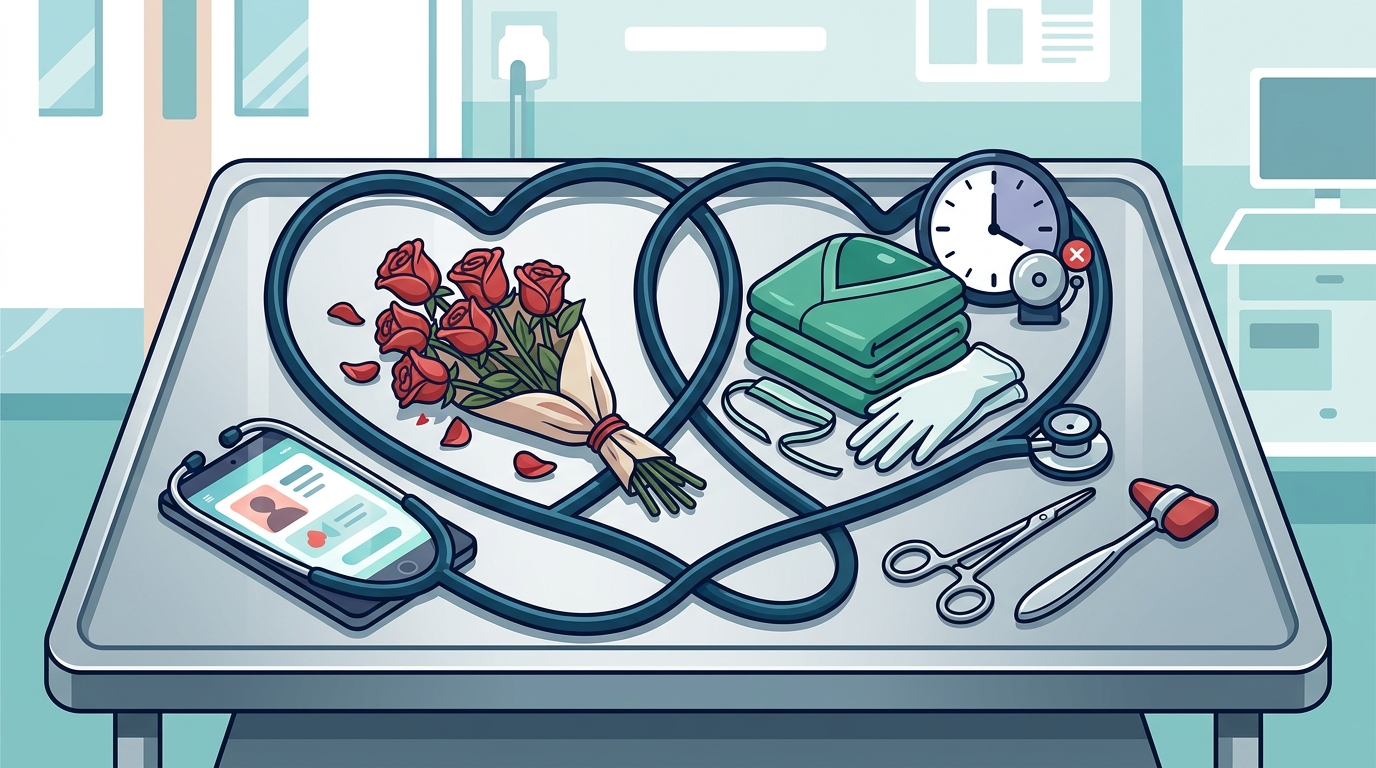
Building a Supportive Partner Ecosystem
For example, a doctor might rely on a close friend for venting after a traumatic case. Their romantic partner is not expected to be the sole source of emotional support. This distribution of emotional labor prevents burnout and keeps the romantic relationship fresh.
This approach encourages partners to maintain their own social connections and hobbies. It creates a balanced dynamic where both individuals have independent support systems. The implication is a resilient relationship that can withstand the pressures of medical work.
Key Takeaways
- Irregular schedules require partners to value depth over frequency in interactions.
- Emotional labor necessitates a low-stimulation environment for decompression.
- Professional identity drives a preference for partners with shared values or understanding.
- Clinical training fosters direct and precise communication styles in relationships.
- Intentional dating replaces casual courtship for medical staff.
- Partners must respect the non-negotiable nature of work commitments.
Frequently Asked Questions
Do healthcare professionals prefer dating other medical staff?
Many healthcare professionals prefer partners who understand the demands of the profession, whether they are also in medicine or have a similarly demanding career. This shared understanding reduces the need to explain work-related stress and fosters a deeper connection.
How does shift work affect communication with a partner?
Shift work often limits the time available for communication, requiring partners to be efficient and intentional. Healthcare professionals may prefer scheduled check-ins or asynchronous communication to accommodate their unpredictable schedules.
Is it normal for a doctor to need silence after work?
Yes, it is a common physiological response to high-stress environments. The need for decompression is not a sign of disinterest but a necessary process for emotional regulation and recovery.
How can a partner support a healthcare professional's emotional needs?
Does working in healthcare make dating harder?
It can be challenging due to schedule conflicts and emotional fatigue, but it also leads to more intentional and resilient relationships. Finding a partner who respects the profession's demands is key to a successful relationship.
What communication style do healthcare professionals typically use?
They often use a direct and precise communication style, influenced by clinical training. This approach values clarity and honesty, reducing the likelihood of misunderstandings in personal relationships.
How does professional identity influence partner selection?
Healthcare professionals often seek partners who share their values or understand their professional identity. This alignment creates a common language for discussing work-life balance and reduces friction in the relationship.