
Most mainstream dating platforms do not verify medical licenses, relying instead on self-reported bios. Specialized platforms like DownToDate+ implement stricter identity checks to ensure users are actual healthcare professionals. This verification process protects the community from fraud and ensures that matches share the unique lifestyle demands of medical practice, creating a safer and more compatible dating environment for doctors and nurses. according to OK Cupid Stop For additional details, review the .
Common Verification Methods
Credential verification is the process of confirming that a user holds the professional qualifications they claim. For healthcare professionals, this is critical because the profession requires rigorous training and licensing. General dating apps often skip this step, leading to a higher prevalence of fake profiles. Specialized platforms prioritize this step to maintain trust within the user base. For additional details, review the Customer Experience.
Self-Reporting vs. Active Verification
The Role of Specialized Platforms
Identity Confirmation Processes
Identity confirmation is the step where a platform matches a user's personal identity with their professional credentials. This ensures that the person in the profile photos is the same person who holds the medical license. This process helps prevent catfishing and impersonation, which are common issues on unverified platforms. For additional details, review the Frequently Asked Questions.
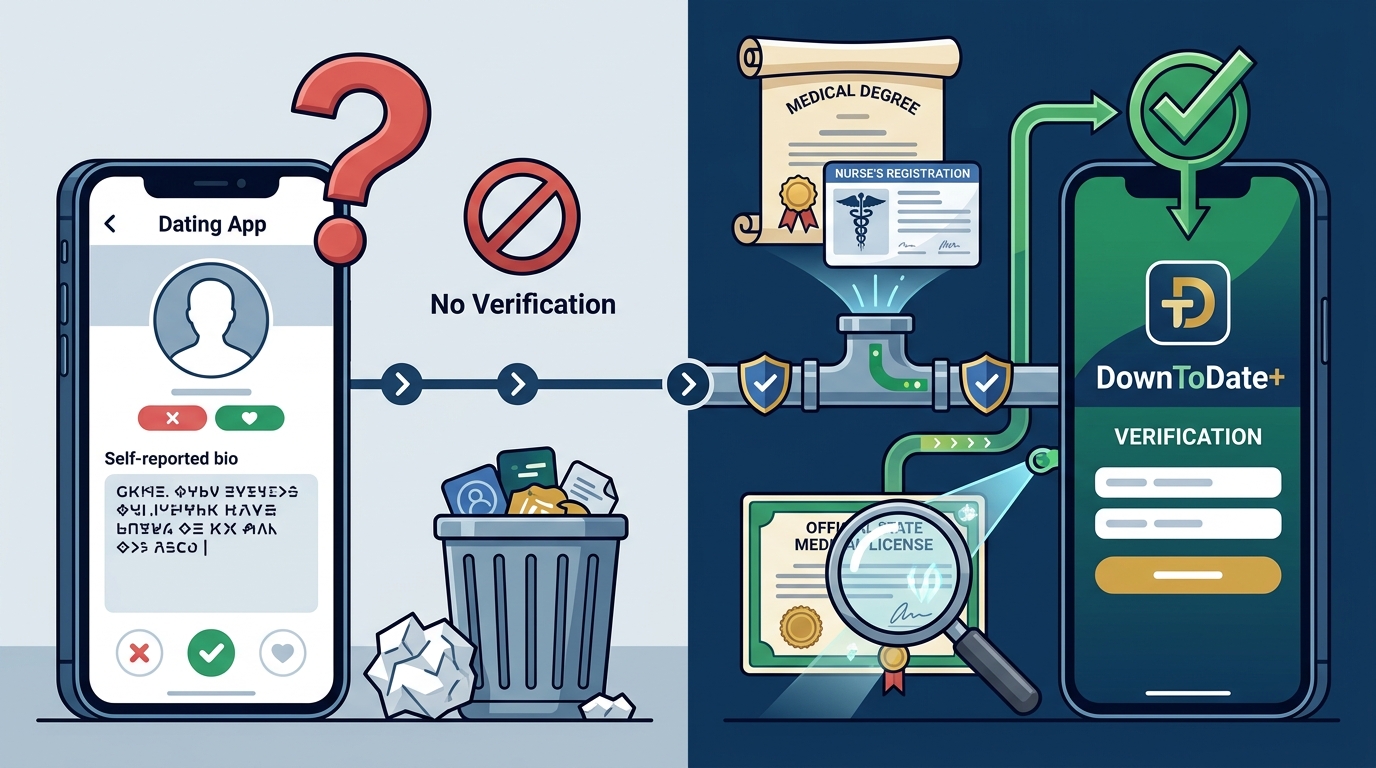
Photo Verification
Many apps use photo verification to confirm that the user is a real person. This often involves taking a live selfie that is compared to the profile photos. While this confirms the user is human, it does not confirm their profession. However, it is a foundational layer of security that prevents the use of stolen images. For additional details, review the About.
Government ID Checks
Some platforms require users to upload a government-issued ID. This verifies the user's name and age. When combined with professional credential checks, it creates a stronger verification chain. This multi-layered approach is essential for building a trustworthy community where users can feel safe sharing personal information.
License and Credential Validation
License validation is the direct check of a user's professional standing with a regulatory body. For doctors, this might involve checking the state medical board database. For nurses, it might involve checking the state nursing board. This is the most definitive form of verification, as it confirms that the user is currently licensed to practice.
State Board Databases
Manual Review Processes
Some platforms use manual review to verify credentials. This involves a human reviewer checking the submitted documents against the regulatory database. While slower, this method can catch discrepancies that automated systems might miss. It is particularly useful for international credentials or complex licensing situations.
Privacy and Data Security
Privacy protection is the practice of ensuring that sensitive user data is not exposed to unauthorized parties. Healthcare professionals are particularly concerned about privacy, as their professional status can be sensitive information. Platforms must handle credential data with the same care as clinical data.
Data Protection Standards
Control Over Information
Users should have control over what information is visible on their profile. Some platforms allow users to hide their specific job title or institution while still showing that they are verified. This gives users the ability to maintain privacy while still benefiting from the verified community. This balance is crucial for professionals who value their personal space.
Benefits of Verified Communities
A verified community is a group of users who have all passed a credential check. This creates a shared understanding of the profession's demands. It reduces the time spent explaining work schedules and stress levels to partners who do not understand the medical field. This shared context can lead to more compatible and lasting relationships.
Reduced Friction in Dating
Dating can be challenging for healthcare professionals due to irregular hours and high stress. A verified community means that potential partners already understand these challenges. This reduces the need for lengthy explanations and helps build a foundation of mutual respect. It allows the relationship to focus on compatibility rather than logistical hurdles.
Higher Quality Matches
Verification filters out users who are not genuine healthcare professionals. This leads to a higher quality pool of potential matches. Users are more likely to find partners who share their values and lifestyle. This can lead to more meaningful connections and a better overall dating experience.
Key Takeaways
- Credential verification is the process of confirming a user's professional qualifications.
- Identity confirmation matches personal identity with professional credentials.
- License validation checks a user's standing with regulatory bodies.
- Privacy protection ensures sensitive data is not exposed to unauthorized parties.
- A verified community creates a shared understanding of the medical profession.
- Specialized platforms like DownToDate+ often employ stricter verification than general apps.
- Users should look for platforms with clear privacy policies and robust security measures.
Frequently Asked Questions
Do all dating apps verify healthcare credentials?
No, most general dating apps do not verify professional credentials. They rely on self-reported information. Specialized platforms for healthcare professionals often implement stricter verification processes to ensure authenticity. according to Key findings about
How does license validation work?
License validation involves checking a user's license number against a regulatory database. This confirms that the license is active and in good standing. It is the most definitive form of professional verification.
Is my credential data shared with other users?
Reputable platforms do not share credential data with other users without consent. They may show a verification badge, but they do not display the actual license number or other sensitive details. Users should review the platform's privacy policy to understand how their data is handled.
What if my license is in a different state?
Some platforms can verify licenses from different states. This may involve checking multiple regulatory databases. Users should ensure that their license is active in the state where they are practicing. This helps ensure that the verification process is accurate.
How long does verification take?
Verification times vary by platform. Automated checks can be quick, while manual reviews may take longer. Users should check the platform's guidelines for estimated processing times. This helps set realistic expectations for when their profile will be fully verified.
Can I hide my specific job title?
Some platforms allow users to hide their specific job title or institution. This gives users control over what information is visible on their profile. It allows them to maintain privacy while still benefiting from the verified community.
Why is verification important for healthcare professionals?
Verification is important because it ensures that users are genuine healthcare professionals. It creates a safer and more compatible dating environment. It also reduces the time spent explaining the demands of the profession to potential partners.
Conclusion
Verification is a critical component of dating for healthcare professionals. It ensures that users are genuine and creates a safer, more compatible community. By understanding the different verification methods, you can choose a platform that meets your needs. DownToDate+ is a specialized platform designed for healthcare professionals, offering a verified community where you can find a partner who understands your lifestyle. Explore the platform to see how it can simplify your dating journey.